 |
||
 |
 |
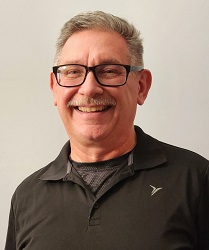 |
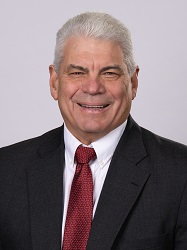
Wayne Asher Monroe St Marys Catholic Central |
Larry Brown Ludington/parma Western/Lumen Christi |
Pete Luczyk Comstock Park |
(click on Inductee's name to read 'description')
|
||
|
|
|
Wayne Asher Monroe St Marys Catholic Central |
Larry Brown Ludington/parma Western/Lumen Christi |
Pete Luczyk Comstock Park |
(click on Inductee's name to read 'description')
 Wayne Asher, Monroe St Marys Catholic Central High School
Many coaches, especially younger ones, may not know that the community of Monroe has enjoyed a distinguished history in terms of high school tennis. Vic Braden (Yes, that Vic Braden, featured speaker at seven of our workshops from 1982-2004) won the state singles championship for Monroe High School three consecutive years – 1946-1948. His coach, Tim Tambling, was inducted posthumously into the first class (1986) of our Hall of Fame. Tim was closely followed by Larry Alto, Class of 1988. Ward Olson was inducted in 1994. Stan Noland, a former MHSTeCA president and long-time member of the state seed committee, joined them in 1998.
Although Stan coached a bit at Monroe High School, he spent most of his time leading the team at St Mary Catholic Central (SMCC). But when he retired, the program lapsed into mediocrity. “After he left SMCC, the team went through numerous coaches,” says Hall of Famer John Shade of Grosse Ile. “They could not field full teams and were not a quality squad at all.”
Enter Wayne Asher who was certainly not new to the tennis scene in Monroe. Growing up on the east side of town, he had taken advantage of sports opportunities which included playing No. 1 singles and doubles for Monroe High. He received the Barker Memorial Tennis Award in 1958 and, because he was a superb athlete, was offered a dual scholarship in swimming and tennis at Bowling Green University. Instead, he opted to walk on at MSU where he won the freshman tennis tournament.
Wayne came to Michigan State having already learned a lot. The legendary Dean Pinchoff, who was an assistant under Alto while Wayne was in high school, honed his singles skills. At MSU, varsity coach Stan Drobac took him to a new level, influencing his style and strategy in doubles. Wayne ended a winding tennis road at MSU by playing 7th on the team.
But upon graduation, he didn’t go into tennis instruction and coaching. Instead with a degree in Biological Science, he hired on at Ford Motor Company as an environmental engineer until his retirement in 1995.
But if retirement is sitting in a hammock under a tree sipping lemonade, it certainly didn’t apply to Wayne. In his later years:
• He started a tennis program at the Monroe Golf and Country Club.
• He operated the Asher School of Tennis for 15 years, teaching the game to 5-18 year-olds.
• He established and co-ordinated the first Junior Team Tennis Program which led to a USTA Junior Team Tennis in Monroe.
• He started the first Community Tennis Association for Monroe County and, of course, was the director.
• He ran six-week summer programs for players of all levels.
• He organized one-day tournaments periodically throughout each summer.
• He was an instructor at the Monroe YMCA.
In the meantime, SMCC had gone through a number of coaches after Stan’s departure with diminished results. Hiring Wayne was a natural. “When he stepped in, the quality improved immediately,” says John. “They were again competitive in our league, at regionals, and at states.”
Wayne coached the Monroe SMCC boys team from 2007-2015. In 2010, his contingent succeeded in qualifying for the final tournament from a regional that included the state’s No. 1, 2, and 3 ranked squads: Ann Arbor Greenhills, Grosse Ile, and University Liggett.
In the spring seasons, Wayne coached the SMCC girls from 2008 to 2019. His girls qualified for “states” nine out of 12 seasons, coming out of, again, surely one of the toughest regionals in the state, one that would field either three or four of the top ten squads in their division. In spite of competing against this heavy artillery, his teams advanced for the final tournament as regional champions four times and as second place finishers on five occasions.
Once these kids finished their work at the final tournament, they would always end up in the Top Ten:
2010: 11th; 2011: 3rd; 2012: 2nd; 2013: 8th; 2014: 8th; 2016: 9th; 2017: 7th; 2018: 5th; 2019: 2nd
Under Wayne’s guidance, SMCC players abounded in achievements.
• His kids won three Huron League titles, notable because that meant a trio of triumphs over John’s
• Twenty two of his girls achieved either all state or honorable mention status.
• At least two of his players went on to play college tennis:
Kelsi Black played at Southeastern University in Lakeland FL before taking a position at the prestigious IMG (formerly Bollettieri) Tennis Academy in Bradenton.
Amber Laginess played 1S at Adrian College.
One of the many reasons why Wayne was so well-liked was that he could be found squarely in the midst of tennis activities in the off seasons. Wayne was present on the tennis scene all his life as a player in local tournaments. In addition:
• He started a Quick Start 10 and Under at the Monroe Family YMCA.
• He began the first junior high program in Monroe County.
• He ran one-day tournaments each Friday during the summer.
• He was the founder and director of the Monroe County Community Tennis Association (CTA), a non- profit organization through the USTA which seeks to grow tennis in a specified area.
His won-loss record was 181-59. It should be noted that, unlike other coaches, he never counted quad meets as three dual meet victories. His girls teams notched a record of 34-2-5 in just his last two years alone.
Wayne’s success was not just due to his efforts within the confines of the Monroe community. “He would seek out the best teams to play and would travel anywhere in the state,” says John.
Nancy Brissette of Essexville Garber (Hall of Fame Class of 2019) confirms this. “He would bring his team to Midland in February to participate in a workshop for both players and coaches, one that was put together by Mike Woody of the community tennis center,” she says.
“His players didn’t just like him, they loved playing for him,” says Sol Muzher of Gabriel Richard.
• Former 1S (and 2S state champion Kelsi Black): “He was a great coach. He treated us like we were all unique and special in our own way.”
• Former state doubles champion Chrissy Flynn: “I just loved Coach Asher. He was always nice and helpful. He never yelled or got mad at the little things.”
• Former doubles state champion Holly Laginess: “He was just so sweet. You had to love him.”
• Former 3S state champion Taylor Kennedy: “I loved playing for Coach Asher. I couldn’t imagine playing for anyone else.”
• Former 1S Willow Biggs: “Coach Asher was very supportive. If it wasn’t for him, I don’t think I would be who I am today. He was an all-around awesome coach. He will always be in my life.”
“This adoration might be simply icing on the cake but it could be argued that these glowing sentiments are instead the actual cake and the superior win/loss record was simply the icing.,” says Coach Sol.
Colleagues were just as impressed. “Unlike other coaches who yell and use pressure techniques to get players to perform, Wayne was just the opposite,” says Lee Keating of Everest Collegiate High School “He was gracious and kind, encouraging them all the way. After our competitions, he always had nice comments about both his players and my players.”
“What was most impressive about Wayne was how he handled adversity,” continues Lee. “After all, it is in adversity that you get to know the man. Under pressure, a person reverts to habit. Wayne always showed me who he was under pressure. He displayed distinctive and stable qualities. He was the gold standard for all coaches and the Hall of Fame.”
Coaches across the state respected Wayne as a true gentlemen,” says Coach Sol. “Many encouraged their players to join his summer programs.”
His abilities certainly did not go unrecognized. He was:
Huron League Coach of the Year in 2009 and 2010
Monroe County Coach of the Year every year from 2010-2019.
MHSTeCA Regional Coach of the Year in 2010, 2013, and 2018.
MHSTeCA State Coach of the Year in 2018.
“Wayne was at this vocation – as a player in local tournaments, as an instructor, as a community tennis organizer, and as a high school tennis coach – for pretty much all of his life,” says Lee. “It began with a love of the game, how it makes us feel, then making it contagious to others. He loved passing the game on to others. He especially loved taking kids from other sports and converting them to tennis. In other words, he was a tennis evangelist.”| Back to Top |  |
Larry Brown, Ludington/Parma Western/Lumen Christi High Schools“As a high school player in nearby Jackson during the early 1960s, I knew that Parma Western tennis didn’t exist,” says Ed Waits. “Moreover, through the ensuing years, my involvement in the MHSTeCA meant -- or so I thought -- that I was well versed in our sport statewide. I was the Top Ten Rankings Co-ordinator for several years, the newsletter editor for five, the membership chair for 20, and the Hall of Fame secretary for 26. Imagine my surprise when I learned in the early 2000s that this perimeter Jackson school not only had a tennis team but a good one.”
How good? Although the program was started in 2001 which was three years prior to Larry Brown taking over, there was no JV team nor middle school program nor elementary school activity. No coach had attended a tennis workshop.
But by 2007, Parma Western’s JV team was 13-1. The middle school program had over 50 kids. There were 30+ kids in the elementary program. Four of the school’s tennis coaches attended the MHSTeCA clinic.
Moreover, varsity boys team went 13-0 that same fall. They won four of five tournaments including the regional and placed 8th in the state. ‘Unlike me,” says Ed, “the MHSTeCA board was very aware of Larry and what he was doing, He was our D3 Coach of the Year after that season.”
This was an astonishing rise. Part of the reason was that there were already some very good players in the wings just waiting for the school district to establish a program. Parents of these kids -- including Larry who had a daughter in this situation -- applied some pressure. Once the program was established, he was always there to watch; therefore when both the boys and girls coaches stepped down because of time constraints, he was eager to fill the gap.
There is little doubt that he was the primary factor in so much of the Panthers’ success. Larry not only took that team to their first state meet in 2007 but after that banner year, they would be found at the final tournament at the end of almost every campaign. This would occur after winning the regional—again almost every year (4 of them)-- on their way to the state championships.
Larry’s teams compiled a 79-3-3 record over those years and won the Southern Michigan Activities Association championship each season.
“There have been a lot of quality kids and quality families,” he says modestly. “It’s always been about building good relationships.” One example: each season ended with a parent-player-coach conference assessing strengths, weaknesses and establishing goals.
But no, it wasn’t just quality kids and quality families. Larry would run young kids clinics, workships, and camps throughout the year and host boys and girls camps in the summer. His players would report for six weeks – two weeks at a time -- for winter training sessions where they worked on agility and conditioning. Both boys and girls could be found at all freshman home basketball concession stands to raise money for the athletic boosters.
His responsibilities in those days made Larry an exceptionally busy man. His day job was working at Jackson Prison (Personal note: We Jackson natives refer to it as Southern Michigan Penitentiary to eliminate the city reference) as the athletic director in charge of Leisure Time Activities. Over the 27 years that he spent there, he would also teach GED classes as well. (See sidebar in terms of other volunteer activities).
But he maintained two other jobs as well. He would work at the prison until 3:00 and then go to tennis practice from 3:30 to 5:30. In addition he was also the director of the Recreation Degree Program at Spring Arbor University which meant, among other responsibilities, that he would teach two nights per week from 6:00 to 9:00. “Not only was I teaching but I also wrote the degree program there,” he says.
Eventually, Larry stopped coaching the Parma Western boys but continued with the girls which left his fall seasons free, mostly because of his obligations teaching at the Lincoln Hills Golf Club, requirements that extended into the boys season.
Ha! Not so fast.
As it turns out, Larry was recruited to coach the Lumen Christi boys while still living in the Jackson area at this time. Lumen has a traditionally strong tennis team that finished 2nd in the state in the fall of 2025 and once fielded MHSTeCA’s Mr. Tennis, Michael Calderone in 2006. But in 2012, he was approached by the school’s athletic director because they surprisingly didn’t have a coach.
Even though Larry was working at Lincoln Hills Golf Club in Ludington as a tennis instructor, he agreed to help out although their agreement required that he start two weeks into the season so that he could finish his obligations to the country club. Hence, he returned from up north (actually out west) to his home in Spring Arbor to coach the boys at Lumen that fall. “We ended up going to “states” that year,” he says. The team finished at 8-2. They won the conference and the regional.”
However, the summer cabin in Pentwater lured him into retirement. “When I moved to Pentwater, I thought I was gonna retire and not work,” he says. “After a little bit of time, my whole thought process changed.”
Still working as an instructor at Lincoln Hills, he took a job as a track coach for a year at Shelby High School and then accepted a job as the athletic director at Pentwater for three. He also served as the basketball coach for the middle school there.
But given his previous summers in the Ludington area, he had established ties with their high school program in those early days. “Cliff Perez (Hall of Fame Class of 2020) and I would see each other over the years through coaching and we became good friends,” he says. “He was after me to coach in Ludington when I moved up there but I wasn’t quite ready to step back into it.”One reason for that early relationship: Larry would take his Parma Western boys to Pentwater where they would tent camp, run the beach, practice on the Ludington courts, and scrimmage Ludington and Cadillac.
“He was not only a friend but a mentor to many coaches such as myself,” says Cliff of that time. “I was a rookie tennis coach when he reached out to scrimmage my varsity boys tennis team with his dominant Jackson Parma Western squad. His players displayed great sportsmanship while beating my young team. I was so impressed by both his coaching ability and his humility.
“I came back the next day to watch how he ran
practices,” continues Cliff. “They were highly organized, competitive, and filled with passion. After practice, he took the time to answer my many questions and discussed the importance of team building, such as taking your kids camping or playing mini-golf to build camaraderie. This was something he was doing when he took his team from Jackson to Ludington.”
Not surprisingly, Larry also established a relationship with former Ludington tennis coach Tom Kudwa (Hall of Fame Class of 2005). “I got to know him when I used to bring my teams up for scrimmages as well as our preseason conditioning program for the fall when I was at Parma Western,” says Larry. “I would bring them up from Western after the third day of practices and tryouts. The team would camp out at a campground near our cabin by Pentwater We usually were there from Thursday through Monday. We would practice In Ludington and at the Pentwater Tennis Club. This is how I got to know Tom and Cliff. We would always scrimmage Ludington and Cadillac at Ludington during those days.”
Given all these experiences, it was no surprise that he was recruited by these two Hall of Famers and eventually accepted. As a result Larry has coached the varsity Ludington girls since 2018 and only quit the JV boys coach job this past season, a position he had held since 2017. His record with girls stands at 50-22-5. They captured the conference title six times and qualified for state competition twice.
This is a coach who has taken teams from three different schools to the state finals 15 times. His overall boys record as leader of these three schools is 87-5-3. Overall girls record as coach of Parma Western and Ludington is 137-54-13.
“As I look back over the years, one of the things I have valued is what I consider the relationship factor of coaching . The relationships that I have with my kids when they are in school and when they get out of school and as they continue on with their lives and careers Is special. It’s not so much the wins and losses, but it’s those relationships that are built between my kids that play tennis and their families that I find important.”
| Back to Top | |
Pete Luczyk, Comstock Park High School“Pete Luczyk will make an excellent recipient of the Michigan High School’s Hall of Fame honor. He is the type of person for whom this award was made. ”
”This is high praise. What adds even more credibility to it is that it comes from someone who ought to know. Ken Hofmeyer is himself a Hall of Fame honoree (2009) who served his school as varsity tennis coach for 34 years and was our Coach of the Year twice.
However, he quickly acknowledges that he was blessed with considerable help in the person of an experienced 4.0-level player turned A.P Calculus teacher who worked beside him for such a long time as middle school coach and assistant varsity coach.
As an assistant, Pete pretty much did it all. “He always came to the indoor practices in the spring when we needed extra chaperones at the club to organize and run drills since we would usually have 15-18 on just two courts,” says Ken. “He also helped in the fall when we were choosing the varsity members of the girls team during the first weeks of practice.”
In addition, Pete made himself available to help with managing conference and regional tournaments. He was a site director at some of the regionals and conducted conference tournaments in that same capacity. He gave up some of his Saturdays to help run the Comstock Park Invitational. During some of these gatherings when rain made finishing a mess, he would stay to the bitter end -- sometimes into the night -- to finish the matches.
He was the district’s middle school coach for two years before he gave it up to help with the varsity. In addition, “Pete was my first helper when I started the summer program,” says Ken. “He and I eventually co-ran the camp, organizing 80 to 100 kids from first grade to 12th. Together, we ordered T shirts, collected money, and made lesson plans.”
Pete was paid a small wage for coaching the middle school and even less for running the summer program and in that the bulk went to the high school program. Even still, he bought rackets for some of the kids who could not afford them and purchased some of the equipment out of his own pocket for use at varsity squad drills.
It should come as no surprise that he received the MHSTeCA’s Assistant Coach Award in 2008. After all, he was Assistant Boys Varsity Coach for 17 years and Assistant Varsity Girls Coach for 20, all at Comstock Park. It also came as no surprise that he was appointed varsity coach when Ken stepped down.
It is a gross understatement to say that he was well prepared. Although he arrived at the post “riding the wake of Ken Hofmeyer,” the cupboard was surprisingly bare in 2012 in terms of experienced individuals when he took over the reins. “We were left with five returning players in the boys program,” he says.
So as any experienced assistant would do, he hired John Wier to help out. “He was the most charismatic teacher on staff with a wealth of coaching experience, albeit in wrestling and football,” he says. “John took his daughter’s phone, went into her contacts, and began telling (read: not asking) all boys that they were playing tennis.” Period.
“Armed with 20 freshmen boys, we began a new era,” Pete continues. “Going 2-5 with this group that first year was an acceptable start but with the growth that takes place when you get to coach a bunch of court rats, these boys concluded their senior year with an undefeated conference record, a regional championship, and a state runner-up trophy. At the time, I teased that finishing behind Ann Arbor Greenhills made Comstock Park the No. 1 public school in the state.”
And they accomplished this on only a four-court facility.
Pete grew up in the small town of Belmont, thus going to Rockford High School. He was cut from baseball as a freshman; therefore he did nothing sportswise until his senior year.
“I was recruited by the number 1 singles player, Rich Haver, in 1984, he says. “I made varsity two doubles because the team consisted of only nine players. No cut tennis is also a thing when you cannot field a full team.”
“Our team was not good. I was not good. I remember winning one match on the Union High courts in three sets. It was a real nail biter since not one player could hit a serve in the service box. But Rockford won, 4-3.
“I improved my game that next summer hitting with Skip Barczak, a custodian I worked with at Assumption School in Belmont. I then played some tennis at Grand Rapids Junior College in that I took tennis as a PE credit. By then, I had much more game than in high school and was asked to try out for the team by the teacher who coached the team. But having a job in those college years, I took a look at my packed schedule and elected not to play.”
Soon after graduation, Pete secured a teaching job at Comstock Park and became an assistant track coach but an experience helping Coach Hofmeyer with his summer program renewed his passion for tennis. As a result, from 1992 though 2008, he and his mentor took Comstock Park tennis teams to the state finals four times.
In the process, he fostered relationships with so many prominent coaches in the area, many of whom are Coaches of the Year and/or in the Hall of Fame. “Building relationships with players, parents, most administrators, competing coaches, competing players, competing players’ parents...that is the community that I loved being a part of,” he says.
In addition, each February found him at the MHSTeCA workshop where he continued relationships with not only colleagues but also with the equipment representatives.
“It was at these clinics that I procured countless demo rackets and became on a first name basis with the reps,” he says. “It was putting decent rackets into the hands of our athletes whose home financial situation was not ideal.” Pete also hired some of these players as assistant tennis camp coaches as this helped offset their own camp fees. In addition, he included a parent/adult tennis camp open to the community which further broadened the local support of the CP tennis community.
A few years before Pete’s retirement, the conference was expanded to nine teams. He stepped forward to redesign the league tournament. “Have you ever seen a nine-team conference bracket with three rat-tails?” he asks rhetorically. “Where the players on the left bracket cross to avoid duplication of matches? I still cannot believe the endurance of that horrid beast.”
“He redesigned that tournament so that all the players could get in their matches,” says Justin Yoder of NorthPointe Christian. “He made that tournament not last multiple days and made it so that all the coaches felt that their voices were heard.”
“I do not take credit for any of the accomplishments of the players,” he says. “Not once did I step onto the court. I just happened to be there at the time.”
Obviously the Hall of Fame Selection Committee disagreed with that sentiment. So did his colleagues.
“When playing against Pete, it does not take long to see that his players love to play for him.” Justin Yoder, NorthPointe Christian
“He has a knack for making tennis fun while at the same time improving players at all levels.” Brett Lynch, Grand Rapids West Catholic.
“He has proven himself to be an excellent coach both because of his passion for the sport and because he is an excellent teacher.” Ken Hofmeyer
When I started coaching, Pete took me under his wing to make sure that my newly acquired tennis program was in tip top shape and running smoothly. To this day, he continues to watch over me. Aline Le, Kelloggsville.| Back to Top | |